

If an orthodontist has just mentioned a “palate expander” for your child, your mind is probably racing with questions. Just the name itself can sound intimidating. However, this device is one of the most common and effective tools in modern orthodontic treatment.
It’s a key part of creating a healthy, beautiful smile for countless children and, in some cases, adults. This guide will walk you through exactly what a palate expander is for, why it’s needed, and what you can expect from the process.
It is important to understand that every kid needs a consult by age 8 and should undergo treatment before age 10 if needed. After that, the growth plates (palatal suture) close and fuse, after which expansion is no longer possible.

How Does a Palate Expander Work?
Think of the upper jaw as a room that’s simply too small for all the furniture. You can try to rearrange the furniture (the teeth), but things will still be cramped and out of place. A palate expander doesn’t just shuffle teeth around; it actually makes the room bigger.
This process of dental palete expansion gently widens the upper jaw itself, creating the necessary foundation for permanent teeth to align properly and for the bite to fit together correctly.
While widening the jaw might sound dramatic, the process is surprisingly gentle and gradual. Orthodontists have successfully used this technique for decades, recognizing it as a predictable way to solve foundational issues.
By creating a proper dental structure during the early in childhood dental care, this simple device can help prevent more complex problems later, sometimes even reducing the need for tooth extractions or improving airflow for better breathing.
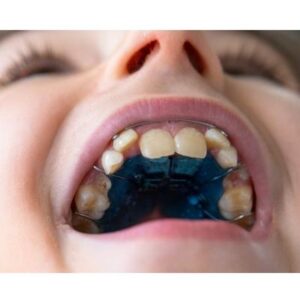
What Problem Does a Palate Expander Actually Solve?
It fundamentally reshapes the foundation of the smile to fix structural problems like crossbites and severe crowding, while sometimes offering the added benefit of easier breathing.
Most often, an orthodontist or dentist providing orthodontic services recommends an expander to correct a problem called a crossbite. Think of your upper teeth as the lid on a box and your lower teeth as the box itself. A healthy bite is when the lid fits neatly over the outside of the box.
A crossbite happens when the upper jaw is too narrow, causing some of the top teeth—usually in the back—to bite down inside the bottom teeth. This can lead to uneven jaw growth and tooth wear over time.
Beyond just fixing the bite, expanders tackle the root cause of severe crowding. Instead of just straightening the teeth in a too-small space, an expander makes creates the room needed for a healthy, straight smile.
A less obvious but important reason for expansion is related to breathing. The roof of your mouth is also the floor of your nasal passages. When the upper jaw is very narrow, it can sometimes restrict the airway, making it harder to breathe through the nose.
For some individuals, especially those who are chronic mouth-breathers, widening the palate can open up these passages and improve airflow.
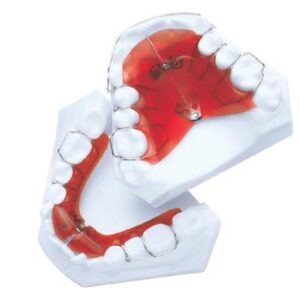
How Does an Orthodontic Expander Work? The Key to a Wider Jaw
The secret to the expander’s power lies in a tiny screw embedded in its center. Following your orthodontist’s schedule, you or your child will use a special key to give this screw a small turn, usually once or twice a day.
Each turn widens the appliance by a very small, precise amount—often less than a quarter of a millimeter. This action places gentle, steady pressure on the two halves of the upper jaw, encouraging them to slowly move apart. It is working in slow motion to create space exactly where it’s needed.
The sensation is typically described as pressure or tightness, not sharp pain. Someone with a palate expander might feel this pressure across the roof of your mouth, around your nose, or even between your front teeth for a few minutes after turning the key.
This feeling is a sign that the expander is doing its job, and it usually subsides quickly. Over-the-counter pain relievers can help with any initial discomfort, just as they would after a regular orthodontic adjustment.
This whole process is possible thanks to a special feature of a growing jaw. The upper jaw (or palate) isn’t one solid piece of bone in children and adolescents. Instead, it’s two halves joined by a soft, flexible growth plate down the middle called the palatal suture.
The expander’s gentle pressure widens this natural seam, and the body then builds new bone in the space created. This is why expansion is most effective before the suture fuses in the mid-to-late teens, permanently setting the jaw’s new, wider foundation.

Your Day-to-Day Guide: What to Expect During Palate Expansion
As the expander does its job, you will soon see the most telling sign of success: a small gap forming between the front two teeth. While it might look surprising at first, this space is fantastic news!
It is visible proof that the upper jaw is successfully widening and creating the healthy foundation a smile needs. Don’t worry—this gap is completely temporary. Once the expansion phase is over, braces will easily bring the teeth together to close the space.
Getting used to the appliance takes a little time, both for speaking and eating. You might notice a slight lisp for the first few days as your tongue learns to navigate around the expander.
The best way to speed up this adjustment is to practice talking! Reading a book aloud for a few minutes each day works wonders. Eating will also feel different, and sticking to softer foods is key for comfort and can provide effective palatal expander pain relief as your mouth gets used to the new sensations of pressure.
To make mealtimes easier, especially during the first week, it helps to know what to eat with a mouth expander. Stock your kitchen with some of these comfortable and safe options:
- Smoothies and milkshakes
- Yogurt, pudding, and applesauce
- Mashed potatoes
- Soups and broths
- Scrambled eggs
- Well-cooked pasta or mac and cheese
Steering clear of very hard, crunchy, or sticky foods like hard candies, nuts, and chewing gum will help protect the appliance and keep your treatment on track.

The Practical Details: Cleaning, Cost, and Treatment Timeline
Keeping the expander clean is simpler than it looks. While food can get trapped, knowing how to clean an orthodontic expander effectively just takes three quick steps to ensure everything stays hygienic.
- Brush: When you brush your teeth, also brush the metal parts of the expander you can reach.
- Flush: Use a water flosser or a simple oral irrigator (a syringe with a curved tip) to gently flush out any food particles from underneath the appliance.
- Rinse: Finish by swishing with an antiseptic mouthwash to kill germs and keep your breath fresh.
Understanding the treatment timeline also helps manage expectations. Dental palete expansion is broken into two main parts.
The first is the “active phase,” where you turn the key. This part is surprisingly short, usually lasting only two to four weeks.
The second is the “retention phase.” During this time, the key-turning stops, but the expander stays in place for several months. This gives the newly widened bone time to solidify and heal, much like letting concrete set after it’s been poured.

Can Adults Get a Palate Expander? The Difference Age Makes
While palate expanders are remarkably effective in growing children, the same approach doesn’t work for most adults. The reason lies in the palatal suture—that flexible seam in the roof of the mouth. In childhood, this suture is pliable, like two pieces of leather stitched together.
By late adolescence, however, it fuses into a single, solid piece of bone. Trying to use a traditional expander on a fused palate would be like trying to stretch solid concrete; it would just painfully tilt the teeth outward.
For adults who need significant maxillary expansion, the solution is a safe procedure called Surgically-Assisted Rapid Palatal Expansion (SARPE). This approach combines the expertise of an oral surgeon and an orthodontist. The surgeon performs a minor procedure to re-open the fused suture, recreating the palate’s youthful flexibility.
Afterward, the patient uses the same type of expander to gently widen the jaw, making a rapid palatal expander in adults achieve the same excellent results seen in children.
For adults with only minor crowding or very narrow arches, there may be alternatives to jaw widening surgery. Some advanced orthodontic techniques, including certain types of traditional braces or clear aligners, can create the appearance of a wider smile by carefully repositioning the teeth within the existing jawbone.
It’s important to understand the difference: these methods move the teeth, not the bone itself. Your orthodontist can determine if your goals can be met by moving teeth alone or if true jaw expansion is needed.
Beyond Straight Teeth: The Lifelong Benefits of a Wider Jaw
Perhaps the most significant benefit of early jaw expansion is its ability to prevent the need for tooth extractions down the road. In cases of severe crowding, a traditional solution was often to remove healthy permanent teeth to make room. A palate expander offers a more proactive approach: instead of reducing the number of teeth, it simply creates a properly sized jaw for all of them to fit comfortably.
This highlights a key difference between a palate expander and braces. Braces are fantastic tools for straightening teeth and guiding them into their ideal positions within the existing jaw. An expander changes the foundation itself. As mentioned earlier, braces rearrange the furniture, while an expander makes the room bigger. Often, they work as a team, with the expander first creating the necessary space, and braces then perfectly aligning the teeth within it.
The results often extend beyond a healthy bite. The benefits of maxillary expansion are frequently visible in a person’s overall appearance. By widening the upper jaw, the treatment can create a broader, fuller smile that reveals more teeth—a feature many people find aesthetically pleasing. This foundational change can also contribute to improved facial symmetry and a more balanced profile, providing a lifetime of confidence.
Ready to Talk to Your Orthodontic Options? Your Next Steps to a Confident Smile
Now you can confidently spot the signs—like a crossbite, severe tooth crowding, or even consistent mouth breathing—that signal a conversation with an orthodontist is worthwhile. You understand that sometimes the best solution isn’t just moving teeth, but creating a better foundation for them to thrive.
Armed with this knowledge, you can book a consultation with Cleveland Smile Center as an informed partner in your or your child’s care. To help guide that conversation, here are three key questions to ask:
- What specific problem will the expander solve for me/my child?
- What can we expect during the first week of turning the key?
- What is the total estimated treatment time, including the retention phase?
Asking questions like these transforms the process from a mystery into a common, safe, and highly effective part of modern orthodontic treatment. You are now equipped to make the best decision for your family, confident that you’re not just addressing a dental issue, but building the foundation for a lifetime of better health and a wider, more balanced smile.
Contact Cleveland Smile Center today to get request an appointment online.
Additional Posts
-

What Does Sugar Do to Your Teeth?
October 19, 2026
Do you or a loved one have a sweet tooth that's hard to control? If you answered yes, you aren't …
-

How To Brush Your Teeth: A Refresher
October 1, 2026
What Is the Right Way to Brush to Your Teeth? You have been brushing your teeth for your almost your entire …
-
Getting Your Teeth Cleaned Prevents Gum Disease
September 24, 2026
There are so many benefits to getting your teeth cleaned. One of the most important is that it can help …