
Let’s be honest—nobody gets excited about dental X-rays. But here’s the thing: they’re one of the smartest tools we have to keep your smile healthy and avoid surprise dental emergencies down the road.
Think of X-rays as your mouth’s “behind-the-scenes” camera crew. While we can see a lot during your regular exam, there’s a whole world hiding beneath your gums and between your teeth that only X-rays can reveal. And catching problems when they’re tiny?
That’s the secret to easier, less expensive dental care.
With modern digital technology and smart safety practices, X-rays use incredibly low radiation doses—seriously, less than you’d get on a short plane ride. The payoff? We spot issues early, plan treatments precisely, and help you keep your natural teeth for life.
If you’re curious about when you’ll need X-rays or how they actually work, we’ve put together this friendly guide to answer all your questions.

What Are Dental X-Rays? The Basics
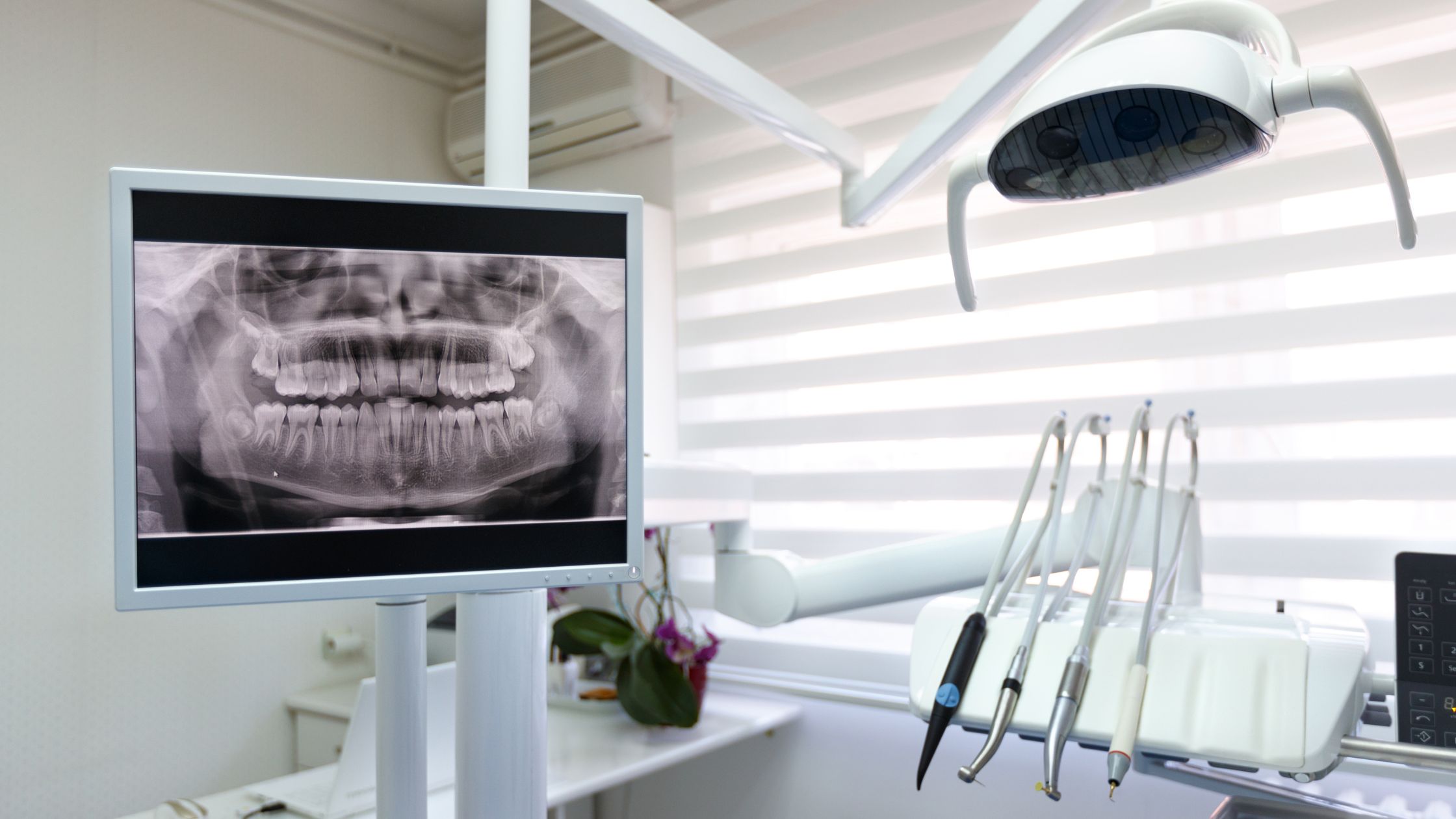
Dental X-rays are simply pictures of your teeth, gums, and jawbone—but they show us what’s invisible to the naked eye. Using safe, low doses of radiation, we capture detailed images that reveal cavities hiding between teeth, infections lurking near roots, and bone changes happening beneath your gums.
Here’s a helpful way to think about it: when you look in the mirror, you’re only seeing the tip of the iceberg. X-rays show us the rest—all the important stuff happening below the surface.
How Do X-Rays Actually Work?
It’s pretty fascinating, actually. X-ray beams pass easily through soft tissues like your cheeks and gums, but they get absorbed by denser structures like your tooth enamel and bone. Digital sensors capture this pattern and create a grayscale image where lighter areas show denser tissue and darker spots reveal softer tissue or empty space.
This contrast is what helps us spot problems when they’re still small enough to fix easily.

Types of Dental X-Rays (and What Each One Shows)
Not all X-rays are the same! We choose different types depending on what we need to see:
- Bitewing X-rays show the crowns of your upper and lower teeth together. They’re perfect for catching cavities between teeth and checking your bone levels. This is usually the type dentists were using before panoramic technology was available.
- Periapical X-rays capture your whole tooth—from the visible crown all the way down to the root tip. We use these when we’re checking for infections, root problems, or unusual formations.
- Occlusal X-rays give us a wider view inside your mouth, showing how your teeth fit together and whether there are any extra or impacted teeth hiding.
- Panoramic X-rays are the “big picture” option—one broad image showing your entire jaw, sinuses, TMJ (jaw joints), and all your teeth at once. These are especially helpful for checking wisdom teeth or getting an overall screening.
- CBCT (Cone Beam CT) scans are 3D X-rays that show your anatomy in incredible detail, layer by layer. We typically use these for complex situations like dental implant planning, tricky root canals, or other oral surgery procedures.
Why X-Rays Matter: Seeing What You Can’t Feel
Think of X-rays as a GPS for your dental health. They show us the road ahead, potential obstacles, and the best route to get you where you need to go—often before you feel any symptoms at all.
Hidden Cavities Don’t Play Fair
You might be thinking your teeth feel fine, but tooth decay loves to hide in places you can’t see or clean easily—like between your teeth or underneath old fillings. X-rays can reveal these sneaky cavities when they’re still tiny. Catching them early usually means a simple filling instead of a root canal or crown later.
Gum Disease Starts Quietly
Gum disease often begins without any pain or obvious symptoms. X-rays show us subtle changes in the bone levels around your teeth—early warning signs that let us treat gum problems before they threaten the stability of your teeth.
Root Problems and Hidden Infections
Periapical X-rays can reveal infections at the tips of your roots (they look like dark “shadows”), cracks in your tooth structure, or unusual root shapes that might cause trouble. With this information, we can decide whether you need a root canal, a tooth extraction, or another treatment approach.
Beyond Your Teeth: Jaw, Sinus, and TMJ Health
Panoramic images and CBCT scans look at more than just teeth. They can reveal impacted wisdom teeth, sinus issues that affect your upper molars, changes in your jaw joints, cysts, or other conditions that need attention. For patients with TMJ or TMD, it helps us to keep our eyes on that temporomandibular joint.

The Real-Life Benefits
Prevention Beats Emergency Dentistry Every Time
Here’s the biggest win: X-rays help us find problems at their smallest, most manageable stage. A tiny cavity might be fixable with fluoride treatment or a minimal filling. A slight bone change might just need improved gum care. Catching things early means smaller procedures, less discomfort, and lower costs. It also means you can avoid emergency dental visits.
Better Treatment Planning Means Better Results
Whether you need a filling, crown, implant, or braces, great results start with clear imaging. X-rays show us how deep decay goes, the quality and height of your jawbone, where your roots are positioned, and how your teeth relate to important structures like nerves and sinuses. This precision translates to safer, more predictable treatments.
Tracking Growth and Development in Kids
For children and teens, X-rays reveal how adult teeth are forming and coming in. We can spot missing teeth, extra teeth, or crowding issues early on. With timely intervention, kids may avoid more complicated orthodontic work later.

Safety First: What You Need to Know About Radiation
Let’s address the elephant in the room: yes, X-rays use radiation, but modern dental X-rays use extremely low doses—especially with digital technology. We follow a principle called ALARA: “As Low As Reasonably Achievable.” This means we only take the X-rays you truly need and use every available method to minimize your exposure.
Digital Technology Changes Everything
Digital X-rays have been a game-changer. They require shorter exposure times, produce clearer images, and show results instantly. Many practices also use rectangular collimation and customize settings based on your size and specific needs—all of which cut exposure significantly. Our offices users an intraoral scanner for these types of dental images.
Protective Gear That Actually Works
We don’t just throw a lead apron over you for show. Lead aprons and thyroid collars shield your sensitive areas, while rectangular collimation narrows the X-ray beam to cover only what’s necessary. Combined with trained staff and regularly calibrated equipment, these measures keep your radiation exposure impressively low.
Want some context? A full set of dental X-rays typically exposes you to less radiation than you’d get during a few hours on an airplane flight.
Routine Checkups: When Do You Actually Need X-Rays?
There’s no universal schedule that fits everyone. Your dentist considers your dental history, medical background, current symptoms, and risk factors when recommending X-rays.
It Depends on Your Risk Level
Here’s how dentists typically think about it:
- Low-risk patients have excellent home care, no recent cavities, and stable gums. You might only need X-rays every 18–24 months, with targeted images only when specific concerns pop up.
- Moderate-risk patients deal with occasional cavities, some gum inflammation, or medications that cause dry mouth. X-rays might be recommended every 12–18 months to catch issues before they grow.
- High-risk patients face multiple recent cavities, ongoing gum disease, smoking or vaping habits, poorly controlled diabetes, or reduced saliva flow. More frequent X-rays (every 6–12 months) help prevent small problems from snowballing into major ones.
You’re Part of the Decision
Routine, risk-based X-rays are one of the simplest ways to avoid surprise dental emergencies. They help us provide the early, comfortable, cost-effective care that most patients want.
We believe in shared decision-making. If you prefer fewer X-rays, we’ll discuss the trade-offs with you: less imaging might mean a higher chance that small issues go undetected. Some patients are comfortable with that risk; others prefer the peace of mind that comes with regular imaging. Either way, we’ll work together to create a plan that respects your values while protecting your oral health.
Cost, Insurance, and Real Value
What Can You Expect to Pay?
Costs vary depending on many factors including the technology used, your insurance carrier and how many images you need. A set of bitewing X-rays is usually quite affordable compared to major procedures. CBCT scans cost more because they’re 3D, but they can prevent complications by guiding more precise treatment.
Why “Cheap Now” Can Mean “Expensive Later”
Skipping X-rays might save a little money today, but if a hidden problem grows into a root canal, extraction, or other major procedure, your total costs (not to mention stress and discomfort) will end up being significantly more expensive. Smart imaging is really an investment in preventive care.
Ready to Take Control of Your Dental Health?
X-rays aren’t just “another thing” your dentist makes you do—they’re a powerful tool for prevention, early diagnosis, and smart treatment planning. Modern technology has made them safer than ever, and the peace of mind they provide is priceless.
If it’s been a while since your last checkup, or if you have questions about which X-rays you might need, we’re here to help. Contact the Cleveland Smile Center team to keep your smile healthy for years to come.
Questions Patient Often Ask Us
Q: Are dental X-rays safe?
A: Absolutely. With digital sensors, proper shielding, and trained staff, radiation doses are extremely low. The benefits of early detection far outweigh the minimal risks for the vast majority of people.
Q: How often should I get X-rays?
A: It depends on your individual risk factors. Low-risk adults might only need x-rays every 18–24 months, while higher-risk patients may need them more often. We’ll personalize a schedule that makes sense for you.
Q: What if I’m pregnant?
A: If you need an X-ray for urgent care during pregnancy, it can be done safely with proper shielding. Just make sure to tell your dental team you’re pregnant so we can adjust our protocols accordingly.
Q: Do kids need X-rays?
A: Yes, but we tailor them to their growth stage and risk level. X-rays help us prevent cavities and track how adult teeth are developing—important for avoiding complex orthodontic issues later.
Q: What’s the difference between a panoramic X-ray and CBCT?
A: A panoramic X-ray is a broad 2D image of your jaws and surrounding structures. CBCT is a 3D scan that shows much more detail, which is especially helpful for complex procedures like dental implant placement or difficult root canals.
Q: Can I refuse X-rays?
A: Absolutely—it’s your choice. We’ll explain the pros and cons so you can make an informed decision. Just understand that without imaging, some issues might go undetected until they cause symptoms.
Q: Will my insurance cover X-rays?
A: Most plans cover routine bitewing X-rays, especially when they’re done at appropriate intervals. Coverage varies, so we’re happy to check your benefits or help you understand your policy.
Q: Do X-rays hurt?
A: Not at all. You might feel slight pressure from the sensor in your mouth, but the actual X-ray process is quick and painless.
Additional Posts
-

Are you experiencing “Ozempic Teeth” or “Ozempic Breath”?
October 20, 2026
The Effect of GLP-1 Medication on Your Teeth You might have seen the statistics about the growing number of people in …
-

What Does Sugar Do to Your Teeth?
October 19, 2026
Do you or a loved one have a sweet tooth that's hard to control? If you answered yes, you aren't …
-

How To Brush Your Teeth: A Refresher
October 1, 2026
What Is the Right Way to Brush to Your Teeth? You have been brushing your teeth for your almost your entire …